
 +86 18721624519
Can Buildings Be Like Sunflowers? Rotating with the Sun for Energy Efficiency?
In nature, the most famous representative of “chasing the light” is the sunflower. But you might be surprised to learn that in the field of modern architecture, designs that “follow the sun” are becoming a reality. These buildings can automatically adjust their angles based on the sun’s position to optimize natural light, provide shading, and even significantly boost photovoltaic (PV) power generation efficiency.
Table of Contents
- 1. Buildings That “Chase the Light”? Why Is This Trend Growing?
- 2. Three Global Case Studies of “Sun-Tracking” Architecture
- 3. The Secret of Sun-Tracking: It’s All About Your Home Solar
- 4. Why the “Sun-Tracking” Philosophy Makes “Solar + Storage” More Valuable
- 5. Future Homes Will Be as Smart as “Sunflowers.”
1. Buildings That “Chase the Light”? Why Is This Trend Growing?
“Sun-tracking” architecture isn’t just about showing off technology; it is designed to truly enhance comfort and energy efficiency.
The core goals of these dynamic buildings usually include:
- Obtaining optimal natural lighting (Making interiors brighter and warmer).
- Reducing summer heat load (Automatically avoiding direct harsh sunlight to lower air conditioning stress).
- Boosting PV panel efficiency (Maintaining the optimal angle of incidence for solar panels).
- Improving overall building energy conservation.
With the mass adoption of renewable energy, the “integration of architecture and solar energy” (BIPV) is becoming a major new trend. Let’s look at a few classic global examples.
2. Three Global Case Studies of “Sun-Tracking” Architecture
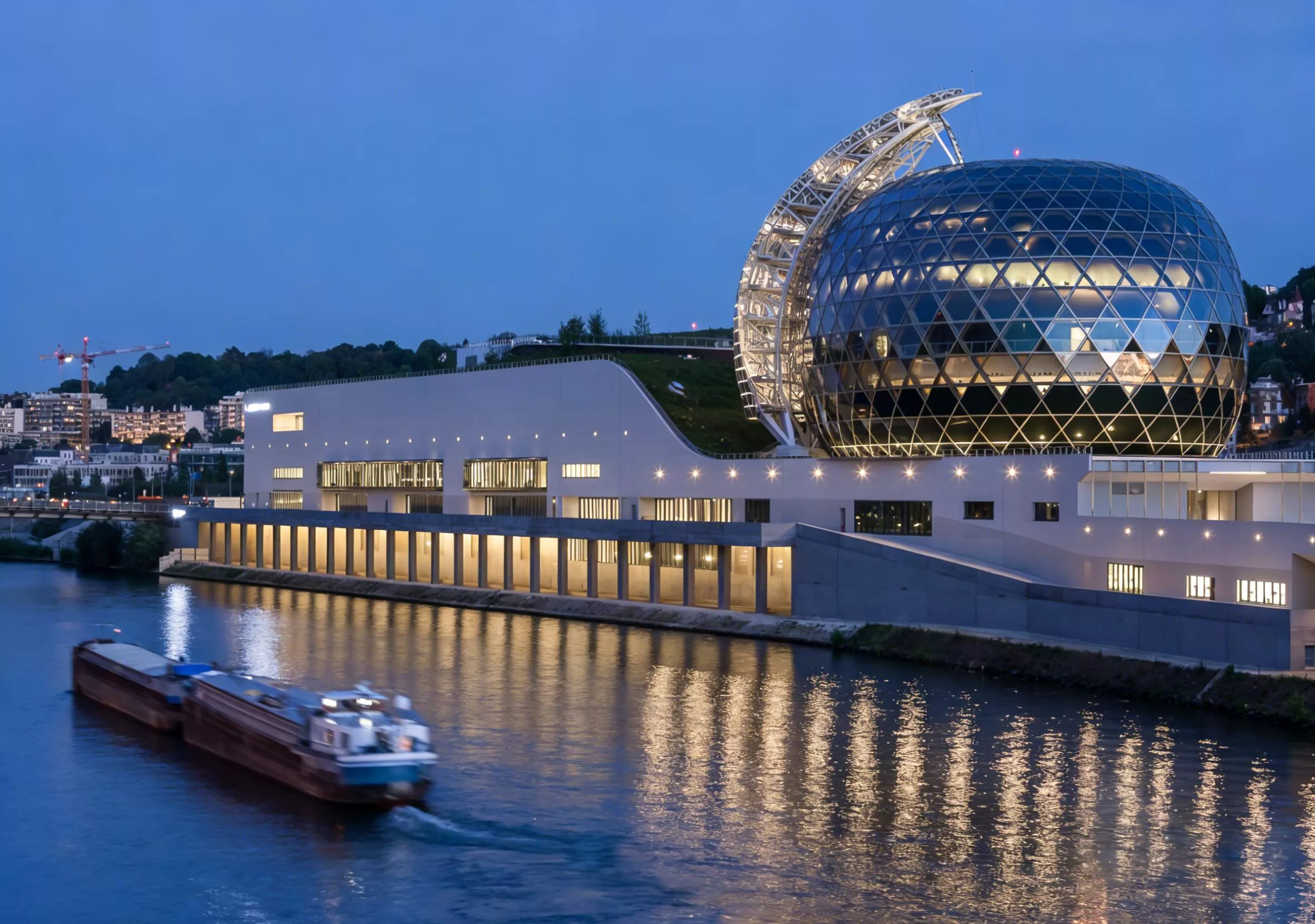
La Seine Musicale in Paris – The “Rotating Solar Sail”
Paris is home to a concert hall featuring a unique set of “solar sails” on its façade.
- The sail is mounted on a 90-meter-long track and adjusts its position every 15 minutes to follow the sunlight.
- It serves to shade and cool the building.
- It simultaneously generates electricity.
The system contains 470 custom photovoltaic panels. It not only provides power to the concert hall but also stands as a striking piece of urban public art. It truly achieves the perfect fusion of architecture and solar energy.
EWE Arena in Oldenburg, Germany – The Moving Photovoltaic Façade
The signature design of this stadium is its sliding photovoltaic curtain wall!
- The PV curtain wall is installed on steel rails.
- It moves every 30 minutes, actively tracking changes in sunlight.
- The upper section features 72 photovoltaic panels.
- The annual power generation reaches 21,800 kWh, equivalent to the annual electricity consumption of a typical household.
This façade design makes the building exterior both aesthetically pleasing and functional, making it a classic case of Building Integrated Photovoltaics (BIPV).
The Heliotrope in Freiburg, Germany – The House That Spins!
This is perhaps one of the most “futuristic” residences in the world.
- The entire house can rotate 360° around a central axis.
- The roof PV system utilizes dual-axis tracking, automatically adjusting its tilt with the sun.
- One side features a large glass wall for daylighting, while the other is a highly insulated wall.
- Depending on the season, it can choose to “face the sun” (heating) or “avoid the sun” (cooling).
It is known as the world’s first “PlusEnergy” house, generating more energy than it consumes. This “rotating house” takes the “sunflower spirit” to the extreme.
3. The Secret of Sun-Tracking: It’s All About Your Home Solar
Seeing this, many might feel that these architectural feats are far removed from our daily lives.
However, their core logic is the same as installing a residential solar system:
—It is all about higher power generation efficiency and better energy utilization rates.
Buildings track the sun because:
- ☑ The angle of sunlight determines lighting and power generation efficiency.
- ☑ Direct exposure to the harsh midday sun increases cooling energy consumption.
- ☑ To maximize PV efficiency, you must maintain the best angle of incidence.
For home solar installations, the principle remains the same:
- Different panel orientations can cause power generation to vary by 10%–25%.
- Shadow shading can directly drag down the output of an entire string of components.
- If paired with energy storage equipment, “excess power” can be shifted to night-time use, increasing self-sufficiency.
You could say that while large buildings “track the light” mechanically, home solar does it through strategic design. With a reasonable panel layout paired with a smart inverter + storage battery, a home system can achieve:
- High-efficiency power generation
- Lower electricity bills
- Stable night-time power supply
- Continued usage during grid outages
4. Why the “Sun-Tracking” Philosophy Makes “Solar + Storage” More Valuable
In the past, people installed solar panels primarily asking, “Will this save on electricity bills?”
But as electricity prices rise and the number of household appliances increases, relying solely on PV panels is often no longer enough.
The current trend is:
Daytime PV Generation → Prioritize Home Use → Store Excess in Battery
Nighttime Usage → Draw from Battery → Buy Little to No Grid Power
This is the essence of sun-tracking architecture: Maximize the use of natural energy and minimize energy costs.
For residential solar users:
- Solar PV increases daytime generation.
- Battery Storage increases nighttime self-consumption rates.
- Overall energy savings can improve by 30–60%.
- It also enhances family energy security during power outages or extreme weather.
This is why more and more families are choosing to install “Solar + Storage Integrated Systems.”
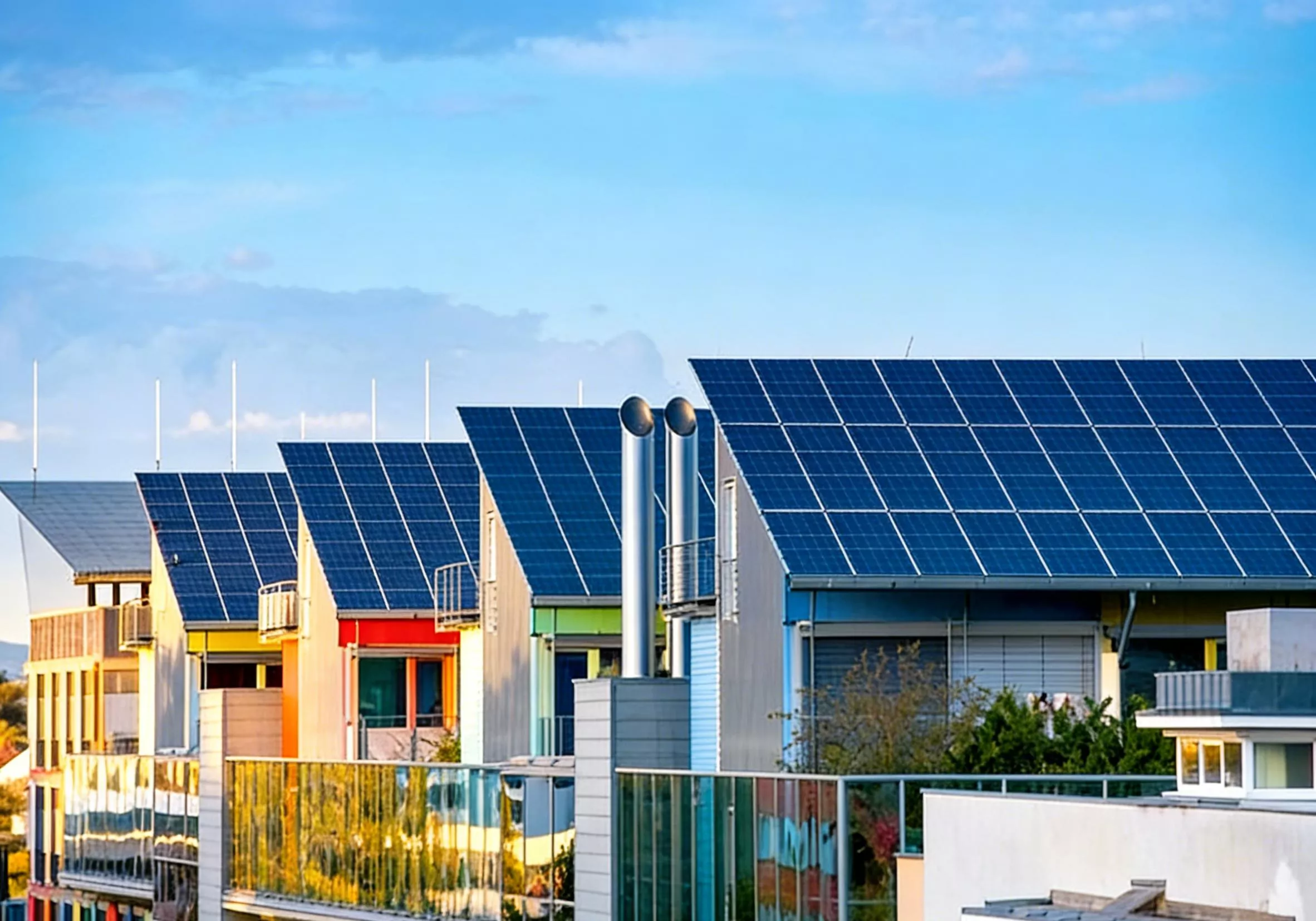
5. Future Homes Will Be as Smart as “Sunflowers.”
When we see these rotating, moving, sun-chasing buildings, we realize—future architecture will inevitably be “smarter.”
For the average family, the first step toward “Smart Energy” is:
- ✔ Install a home solar system suitable for your roof.
- ✔ Equip it with a safe and stable energy storage battery.
- ✔ Let your home possess its own “Sunshine Power Station” to take energy freely from the sun.
Imagine this:
During the day, your home captures sunlight just like a sunflower; excess power is automatically stored in the battery. At night, you can run the air conditioner and water heater without worrying about the cost. Even if the grid goes down, your home remains bright.
This is the real value that the “Sun-Tracking Philosophy” brings to ordinary families.
Start with Home Solar + Storage
If you are considering installing residential solar power or want to know which energy storage equipment best suits your family’s scenario, please feel free to contact us.
We can provide:
- Home PV system scheme assessment
- Roof power generation simulation
- Battery storage capacity recommendations
- One-stop installation and after-sales service
Let us help your home possess a smart energy system just like a “Sunflower.”