
 +86 18721624519
Best Off-Grid Solar Kits for Homes and Vacation Cabins: Complete Buying Guide
1. Why Are Off-Grid Solar Kits So Popular Right Now?
- Rising Electricity Prices: In many countries, electricity rates have increased by 30–80% over the past three years. Peak-hour electricity pricing has made it feel like “using electricity is burning money.”
- Frequent Power Outages in Remote and Low-Coverage Areas: Issues include:
- Long-term power outages in vacation cabins
- Electricity issues on farms or ranches
- Winter snowstorms causing frequent blackouts
- Daily power cuts in developing countries
- Increasing Desire for “Energy Independence”: People living in rural areas, mountains, islands, or off-grid campsites prefer to:
- Not rely on the national power grid
- Be unaffected by power outages
- Have access to electricity whenever needed
- Falling Costs of Off-Grid Solar Kits: As the cost of solar panels has decreased, a complete off-grid kit can even be cheaper than installing two air conditioners.
2. What is an Off-Grid Solar Kit?
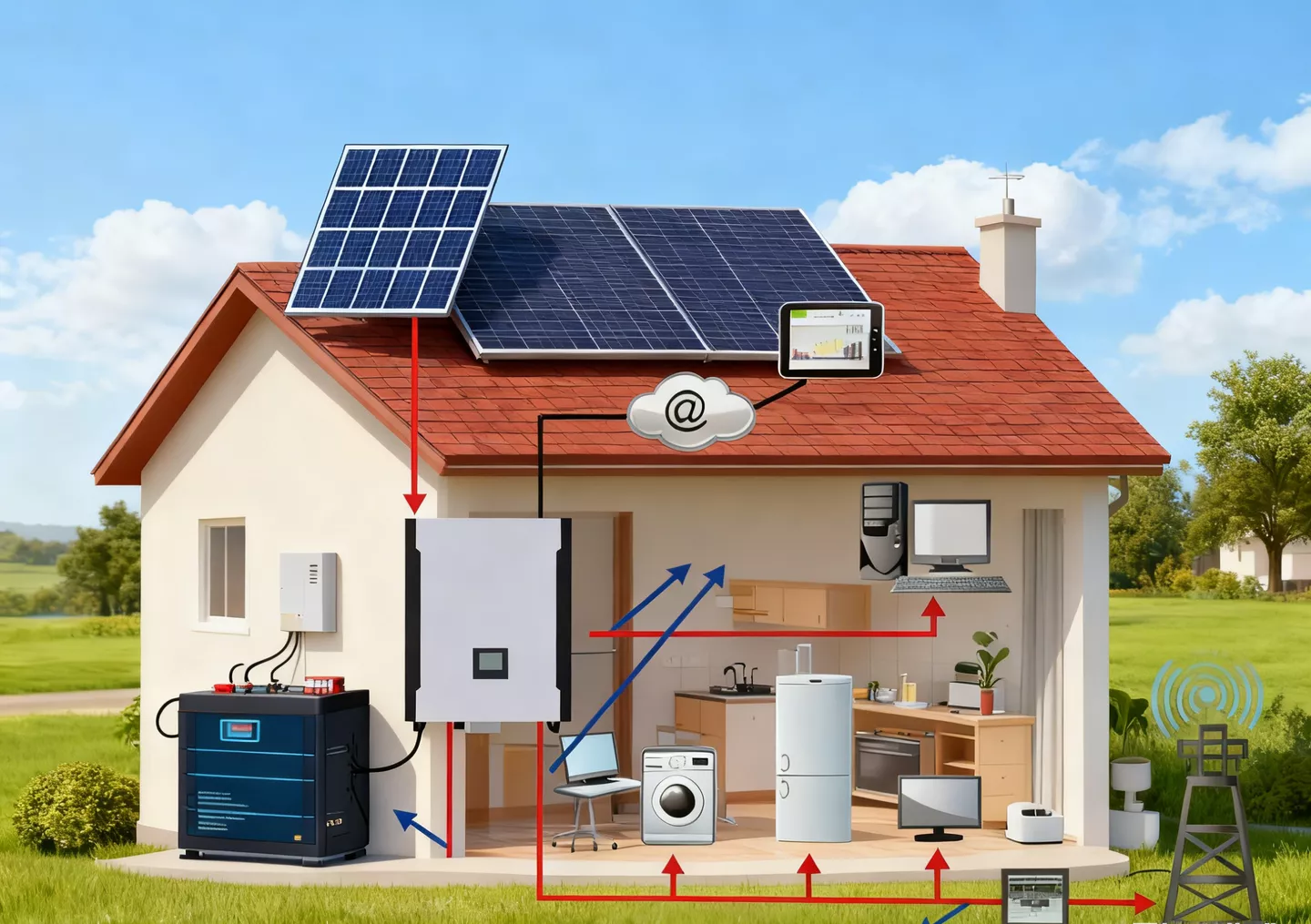
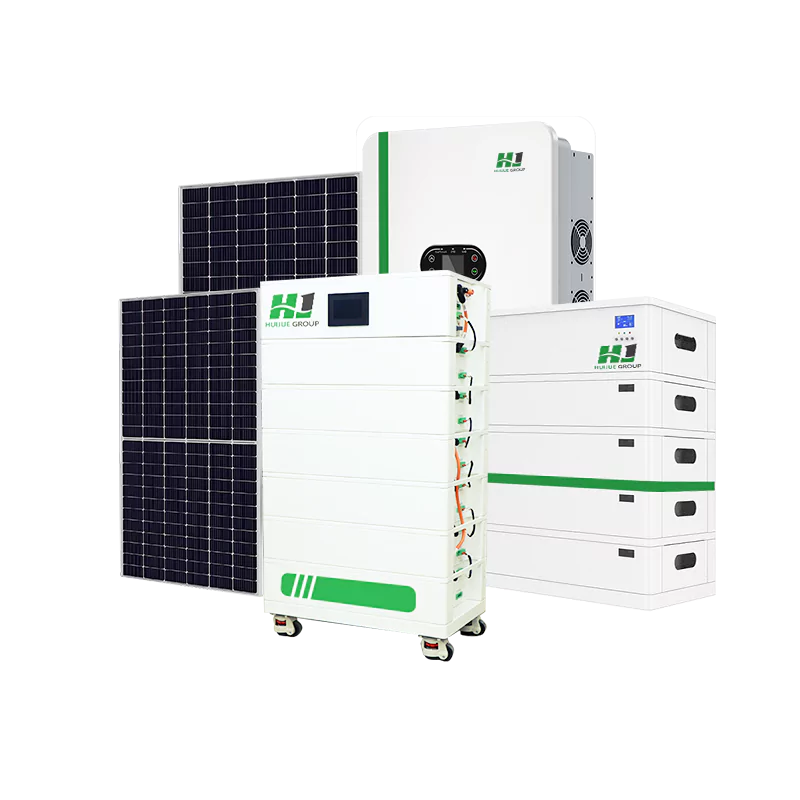
Many people mistakenly think an “off-grid kit” is a portable device you can use directly, but it’s actually a system consisting of multiple core components that work together to provide independent power. A typical off-grid solar solution includes:
- Solar Panels: These convert sunlight into electricity. The higher the power, the more electricity it generates. Recommendation: Monocrystalline panels (higher efficiency).
- Off-Grid Inverter: This converts the DC (direct current) power from the solar battery into AC (alternating current) power used in most homes. Important: Don’t skimp on the inverter because it directly affects:
- Whether you can power your devices
- System stability
- Whether it can automatically switch between power sources
- If it can expand with more panels
For high-quality inverters, consider options like: 8kw-11kw Single-phase Off-Grid Inverter from Huijue Technology Group.
- Battery – The Core of the System: The recommended type: LiFePO4 (Lithium Iron Phosphate) Batteries Why? They have longer lifespans, are safer, and can endure more charge/discharge cycles. Batteries determine how long you can use electricity at night and how long your system will last in cloudy or rainy weather.
- Mounting Brackets, Cables, and Connectors: These are necessary to securely mount, connect, and set up the system.
- Optional Additions: Backup Generator, WiFi Module, Automatic Transfer Switch (ATS) Some users may opt for a generator as a backup to ensure power during cloudy days.
3. How Much Power Do You Need?
Many users are unsure whether they need a 1kW, 3kW, or 5kW kit. Use this table to quickly determine your needs:
| Scenario | Recommended Kit | Devices Powered |
|---|---|---|
| Occasional Use in Vacation Cabin | 1–2kW | Lights, phones, small fridge, internet |
| Small Home | 3kW | Fridge, water pump, daily appliances |
| Full-Time Residential Use | 5kW+ | Fridge, washer, some heaters, some A/C |
| Farm/Ranch/Construction Site | 5kW–10kW | Water pump, tools, small machines |
How to Calculate Your Power Needs:
- Daily Power Output (kWh) Calculation: Daily Output = Panel Power × Sunlight Hours. Example: 1.2kW panel × 5 sunlight hours = 6 kWh/day
- Battery Usable Capacity (kWh): Usable Power = Battery Capacity × Depth of Discharge (DoD). LiFePO4 has a DoD of 80–90%. Example: 5kWh battery × 0.85 = 4.25 kWh usable
4. Residential vs Vacation Cabin: Which Configuration Should You Choose?
Residential Systems (Full-Time Use)
Characteristics: High and stable power demand. Must support essential devices like refrigerators and water pumps. Sometimes needs to support air conditioning.
Recommended Configuration: 3kW–5kW Inverter, 5–10kWh Battery, Expandable panel support, Pure sine wave output
Vacation Cabin Systems (Occasional Use)
Characteristics: Lower power demand. Primarily for lighting, small electronics, and low-power devices. Requires easy-to-install, portable kits.
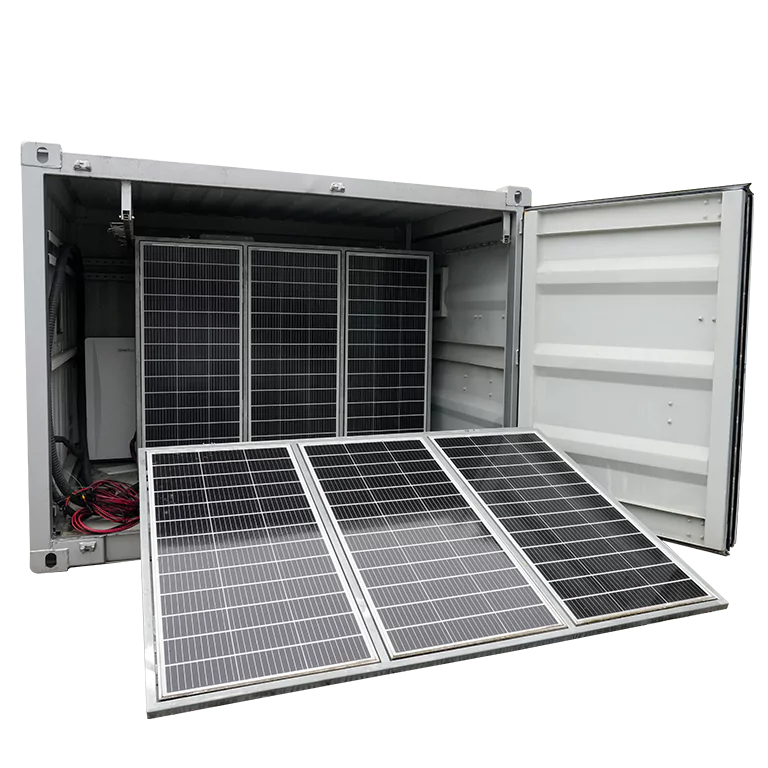
Recommended Configuration: 1–3kW kit, Plug-and-play off-grid systems, Foldable, portable panels
5. Price Range of Off-Grid Kits
| Kit Power | Approximate Price Range | Suitable For |
|---|---|---|
| 1kW | $300–$600 | Small cabins, camping, light use |
| 3kW | $1,000–$2,500 | Small homes |
| 5kW | $3,000–$6,000 | Large homes, farms, full-time living |
Price Variations: The key factor in price difference is the battery. 80% of the cost comes from battery capacity. Larger batteries provide longer-lasting power.
6. Is Installation Easy? Can You DIY?
DIY-Friendly Kits:
- Systems under 2kW
- Modular designs
- No high-voltage work required
- No complex wiring needs
Not Recommended for DIY:
- Systems over 3kW
- Power-hungry appliances like water pumps or motors
- Needs grounding or overload protection
- Parallel connection requirements
7. 7 Key Points to Check Before Buying an Off-Grid Solar Kit
- Battery Type: Preferably LiFePO4 for long-lasting cycles (4000–6000).
- Inverter: Must be a pure sine wave inverter for compatibility with home appliances.
- Expandability: Ensure the system supports future panel and battery expansions.
- Lithium Battery Communication: For better safety and longevity.
- Built-in Protections: Overload, overvoltage, short circuit, and temperature protections.
- Warranty & After-Sales Service: Off-grid systems are long-term assets.
- Real User Testimonials: Avoid poorly performing kits.
8. Recommended Off-Grid Solar Kit for Vacation Cabins and Outdoor Shelters
Core Kit Specifications:
- Solar Panels: 6 units of Huijue monocrystalline panels. High conversion efficiency and sleek all-black design perfect for roofs of homes or cabins.
- Inverter: Huijue 4000W 24V pure sine wave inverter/charger for stable, clean power to sensitive electronics.
- Charge Controller: MPPT 80A high-efficiency solar charge controller for maximizing charging efficiency and energy storage.
- Accessories: Circuit breaker, 2 surge protectors, complete set of cables and connectors, and metal roof, tile roof, or pole installation options.
Why Choose This System?
- High-efficiency, aesthetically appealing black panels that perform well in low-light and high-snow environments.
- Pure sine wave inverter ensures better compatibility with appliances like laptops, routers, refrigerators, and water pumps.
- Flexible installation options with various mounting options.
9. How to Quickly Choose the Best Off-Grid Kit for You
- Clarify Your Daily Power Usage (Most Important): Use the provided calculation method to estimate your power needs.
- Match Your Budget with Battery Size: Larger batteries give you more backup time.
- Opt for Established Brands: A high-quality off-grid system must be stable, safe, and expandable.
If you’re still unsure or need help with configurations, feel free to contact us.