

 +86 13681781808
Qingcun Government Conducts Special Lecture on Anti-Telecom and Online Fraud Security at Our Company

To effectively enhance employees’ awareness and ability to prevent telecom and online fraud, and improve their ability to identify various fraudulent methods, the Qingcun Government, in conjunction with the Qingcun Town Anti-Fraud Center, conducted a special lecture on anti-telecom and online fraud security at our company’s training room at 2:00 PM on January 27th. Relevant department heads and employee representatives from the company participated in the training.
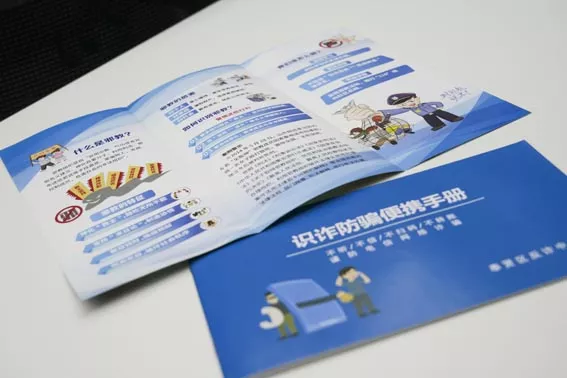
The lecture focused on the current high incidence of telecom and online fraud, systematically explaining the methods, procedures, and prevention points of fraudsters using numerous real-life cases. Anti-fraud staff highlighted ten common types of fraud, including fake online shopping scams, fraudulent credit reports, impersonation of law enforcement officials, fake online investment and wealth management schemes, fake online loans, impersonation of e-commerce and logistics customer service, online dating scams, fake shopping services, impersonation of leaders or acquaintances, and fake online game transactions. They reminded everyone to be vigilant in daily life and work to prevent such scams.
During the lecture, the instructor provided a detailed analysis of fake online investment and wealth management scams. Fraudsters typically lure victims by posting so-called “investment insider information” or “high-yield projects” on social media platforms like WeChat and QQ, or on short video platforms and other social media. They then add victims to pre-arranged group chats, gaining their trust through “expert stock recommendations” and “fake profit screenshots.” After victims make small trial investments and successfully withdraw funds, they are induced to increase their investments, ultimately using excuses such as account abnormalities, system maintenance, or needing funds unfrozen to carry out multiple scams until the victim is completely drained. The presentation of real-life cases made the employees present acutely aware of the insidious nature and harmfulness of this type of fraud.

In addition, the lecture also explained in detail the common tactics used in scams impersonating e-commerce and logistics customer service. Fraudsters often obtain victims’ shopping information through illegal channels, impersonate platform customer service or delivery personnel, and use excuses such as product quality issues, lost packages, or refund/compensation claims to induce victims to click on fake links or scan QR codes, thereby stealing bank card information and verification codes, resulting in financial losses. The lecturer reminded everyone that for any refund or claims process, verification must be done through official platforms, and never trust unfamiliar calls or links.
The lecture was practical and featured vivid, real-life examples, repeatedly emphasizing the core principles of preventing telecom fraud—don’t listen, don’t believe, don’t scan QR codes, and don’t transfer money. Employees were guided to verify information and report any suspicious activity to the police immediately. Attendees expressed that the training provided a clearer and more comprehensive understanding of common forms of telecom and online fraud and prevention methods, further enhancing their self-protection awareness.
Company representatives stated that they will continue to strengthen communication and collaboration with local governments and relevant departments, regularly conduct safety awareness campaigns and training, effectively improve employees’ risk prevention capabilities, jointly build a strong anti-fraud defense, and provide a powerful guarantee for creating a safe, stable, and harmonious working environment.