1kW-6kW
Fully enclosed natural convection cooling with die-cast aluminum enclosure; Protection Rating IP65
View More
Enhance profitability: Increase the consumption rate of green electricity, optimize the timing of energy storage charging and discharging...
View More
400kW
Safety Protection: The galvanized sheet metal process is employed, enhancing anti-oxidation and corrosion resistance by 2-3 times.
View More
240kW
Safety Protection: Employing galvanized sheet metal process, which enhances anti-oxidation and corrosion resistance by 2-3 times.
View More
160kW
Safety Protection: Employing galvanized sheet metal process, which enhances anti-oxidation and corrosion resistance by 2-3 times.
View More
120kW-160kW
Safety Protection: Employing galvanized sheet metal process, which enhances anti-oxidation and corrosion resistance by 2-3 times.
View More
80kW
Safety Protection: Employing galvanized sheet metal process, which enhances anti-oxidation and corrosion resistance by 2-3 times.
View More
20kW
Safety Protection: Employing galvanized sheet metal process, which enhances anti-oxidation and corrosion resistance by 2-3 times.
View More
7kW-21kW
Safety Protection: IP54 protection rating with multi-layered defense system.
View More
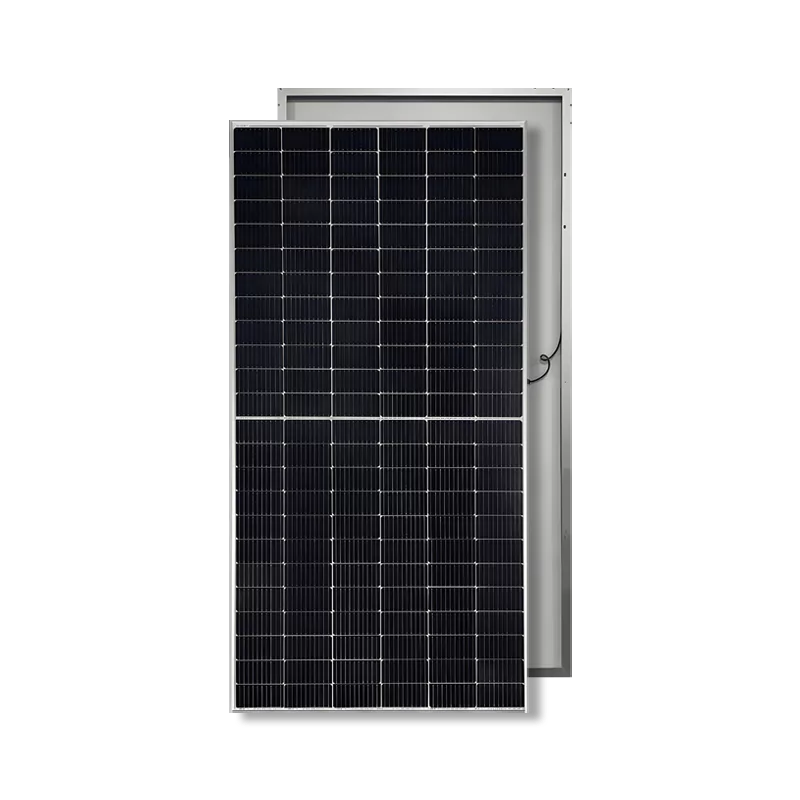
615W-640W
High Power Output: N-type MBB half cut technology, improve energy density, bring higher power output. High Bifacial Factor, up to 25% extra...
View More
710W-730W
High Power Output: N-type MBB half cut technology, improve energy density, bring higher power output. High Bifacial Factor, up to 25% extra...
View More
580~600W
High Power Output: N-type MBB half cut technology, improve energy density, bring higher power output. High Bifacial Factor, up to 25% extra...
View More
620~650W
High efficiency: Products for utility with optimal power generation through the entire lifecycle
View More
Easy Integration: Provides an open platform / cloud data service for quickly building an energy management platform.
View More
Multi-Machine Balanced Intelligent Algorithm: Overall energy balance optimization, cycle balancing and lifespan optimization, dynamic power...
View More
Resource Integration: Integrates various equipment resources within the communication site energy cabinet, such as power devices (UPS...
View More
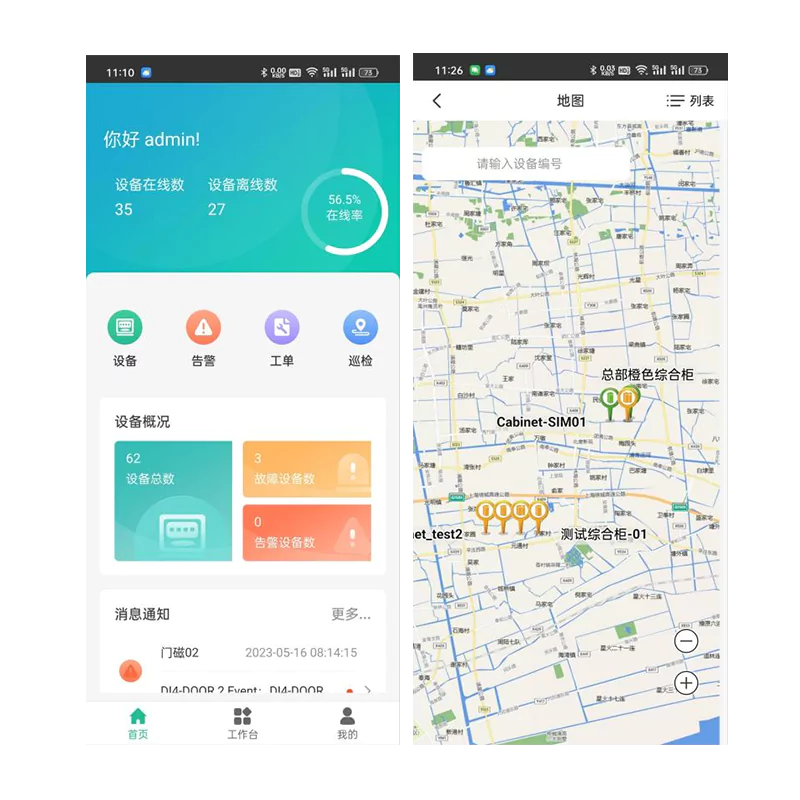
Convenience: Not limited by location or time, as long as there is internet access, engineers can log into the app from any location using a...
View More
650W-700W
High Energy Conversion Efficiency: Utilizes high-purity monocrystalline silicon cells to maximize energy generation.
View More
550W-700W
High Energy Conversion Efficiency: Utilizes high-purity monocrystalline silicon cells to maximize energy generation.
View More
425W-455W
Higher Power Output: Generates more electricity, improving the overall system efficiency to meet the growing energy demands in various...
View More
Rated power is the total possible instantaneous discharge capacity of the system, usually in kilowatts (kW) or megawatts (MW).
Energy is the maximum energy stored (power rate in a given time), usually described in kilowatt-hours (kWh) or megawatt-hours (MWH).
Peak-valley arbitrage
To reduce corporate electricity costs, utilize the difference in peak-valley electricity prices, charge in valley periods and flat periods, and discharge in peak and peak periods.
Balance demand electricity charges
Energy storage systems can smooth out peak loads, eliminate peak loads, smooth electricity curves, and reduce demand electricity charges.
Dynamic capacity expansion
The user's transformer capacity is fixed. Generally, when the user needs the transformer to be overloaded during a certain period, the transformer needs to be expanded. After installing a matching energy storage system, the transformer load can be reduced during this period by discharging energy storage, thereby reducing the cost of transformer capacity expansion and transformation.
Demand-side response
After installing the energy storage system, if the power grid issues a demand response, customers do not need to limit electricity or pay high electricity charges during this period. Instead, they may participate in demand response transactions through the energy storage system and obtain additional compensation.
Basic information: electricity type, basic electricity price, time-sharing period/time-sharing electricity price, and the company's electricity shutdown production situation;
According to the type of electricity, time-sharing period, and electricity price, preliminarily determine the energy storage time-sharing charging and discharging strategy, determine whether to charge by capacity or by demand, understand the company's production situation, and the annual available time of energy storage.
Load power consumption data: power load data for the past year, average/maximum load power, transformer capacity;
Calculate the energy storage construction capacity based on load data and transformer capacity; Detailed calculation corresponds to the load curve data under each transformer connected, which is used to design the system charging and discharging time control logic and system economic calculation.
Primary power system diagram, plant floor plan, distribution room layout, cable trench direction diagram, reserved space, etc.
Used to determine the installation location of the energy storage system, the location of the access transformer, and the design of the access plan.
The power of energy storage charging + the maximum load during the period should be less than 80% of the transformer capacity to prevent the transformer capacity from being overloaded when the energy storage system is charging.
The load during the peak period of daytime electricity prices should be greater than the peak power of energy storage discharge.
Providing only monthly/annual power consumption cannot reflect the 24-hour power load of the enterprise every day, and cannot calculate the energy storage configuration capacity.
Generally speaking, if the power user in the low-voltage grid-connected energy storage project has only one transformer, the power load data provided is consistent with the transformer load data. At this time, the actual installed capacity can be preliminarily determined based on the total load data and transformer capacity; if the power user has multiple transformers operating at the same time, the power load data provided is the total load of various transformers, which cannot reflect the actual load of each transformer. Therefore, it is necessary to understand the load data of each transformer to determine the actual installed capacity.
At present, industrial and commercial photovoltaic storage projects can be achieved through AC coupling of energy storage and photovoltaics. Growatt can achieve energy priority utilization and increase the utilization ratio of photovoltaic energy by monitoring and controlling the integrated energy storage cabinet and photovoltaic inverter and setting the "load priority" mode using the energy management system.
Home energy storage systems can store excess electricity through solar panels during the day and use this stored electricity at night, thereby reducing the need to purchase electricity during peak hours. This can significantly reduce electricity bills, especially in areas with high electricity prices.
The life of a home energy storage system is usually between 10 and 15 years, depending on the battery type, frequency of use, and maintenance. Many energy storage systems provide long-term warranty services to ensure long-term stable operation of the equipment.
The base station energy storage solution generally adopts a redundant design to ensure that it can quickly switch to the backup power supply when the main power fails or the power fluctuates, to keep the base station running 24/7 uninterruptedly. Through the intelligent energy management system, the power status is monitored in real-time, and the power supply is automatically adjusted to maximize the stability and reliability of the system and ensure the continuity of communication services.
Our energy storage solution is flexible in design and can be seamlessly integrated with various existing base station power systems. The modular design can better adapt to different types of base stations, reducing installation time and complexity. The scalable design facilitates future upgrades and expansions according to needs.
We're here to answer your questions and provide the energy solutions that best fit your needs.


 +86 18721624519